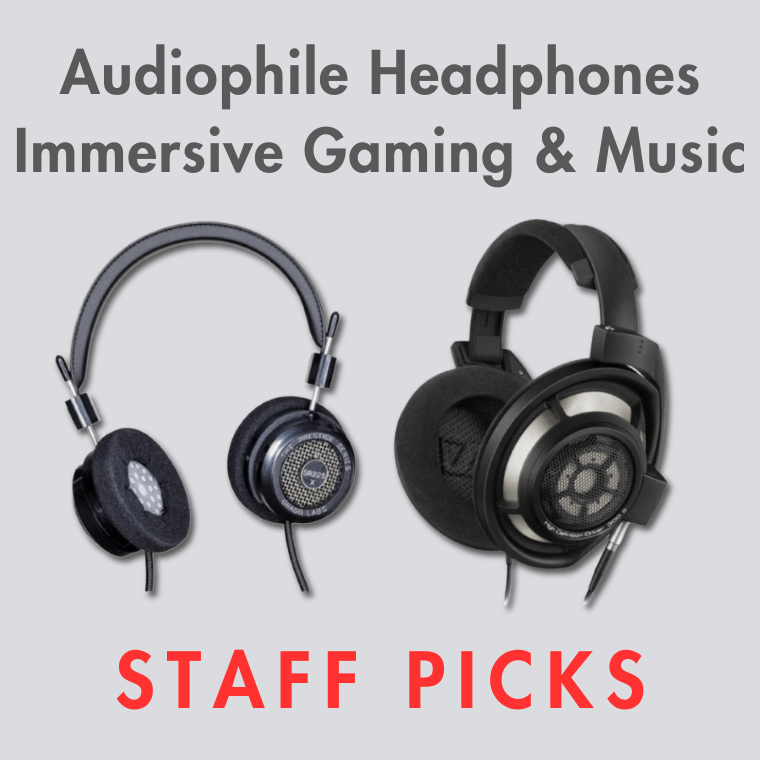
Best Audiophile Headphones for Gaming: Pinpoint Footsteps & Immersion
For too long, gamers have been told that dedicated "gaming headsets" are the only way to achieve a competitive edge through audio. While these products often boast flashy features and aggressive marketing, many seasoned players are discovering a powerful secret: audiophile headphones. Ditching your overpriced gaming headset for a high-fidelity alternative can unlock unparalleled sound quality, dramatically improved spatial awareness, and a level of immersion that transforms your gaming experience. If you're ready to hear every subtle movement, pinpoint enemy positions with uncanny accuracy, and truly lose yourself in virtual worlds, it's time to explore the world of audiophile headphones for gaming.
The transition from a "gaming headset" to dedicated audiophile headphones often comes from a desire for something better, something that transcends the often-muddled sound and inflated prices of typical gaming gear. The question isn't whether audiophile headphones are merely "as good" as gaming headsets for critical details like footsteps or surround sound; it's whether they are inherently superior. The answer, for many, is a resounding yes.
Why Audiophile Headphones Elevate Your Gaming Experience
The core advantage of audiophile headphones lies in their commitment to accurate and detailed sound reproduction. Unlike gaming headsets, which sometimes prioritize booming bass or exaggerated effects, audiophile cans aim for neutrality and clarity across the entire frequency spectrum. This translates directly into gaming benefits:
- Superior Soundstage: This refers to the perceived spatial environment created by the headphones. A wide, accurate soundstage allows you to hear sounds as if they are coming from distinct points around you, rather than just inside your head. For competitive games, this means a better sense of where enemies are in relation to your character, both horizontally and vertically.
- Pinpoint Imaging: Hand-in-hand with soundstage, imaging is the ability to precisely locate individual sound sources within that space. Imagine hearing footsteps not just to your left, but specifically behind and to your left, or a reload sound coming from an exact bush across the map. This level of detail is crucial for tactical advantages in FPS games and enhances realism in all genres.
- Unrivaled Detail Retrieval: Audiophile headphones reveal subtle audio cues often lost on lesser equipment. The rustle of clothes, the distant creak of a door, the delicate click of a weapon being readied – these are not just ambient noises, but vital pieces of information that can inform your decisions and give you a precious split-second advantage.
- Enhanced Immersion: Beyond the competitive edge, the sheer fidelity of audiophile sound makes games come alive. Explosions have more impact, musical scores are richer, and environmental sounds are more convincing, pulling you deeper into the game's world.
- Better Value & Longevity: Often, the build quality and component selection in audiophile headphones far surpass that of similarly priced gaming headsets, which can feel flimsy and prone to early failure. Investing in a quality pair means a durable product that will serve you well for years, not just for gaming but also for music and movies.
For a deeper dive into making the switch, consider reading Audiophile Headphones for Gaming: Ditch Your Headset for Better Sound.
Open-Back vs. Closed-Back: Making the Right Choice
One of the most frequently asked questions when considering audiophile headphones for gaming is whether to choose an open-back or closed-back design. Each has distinct characteristics that impact soundstage, isolation, and overall experience.
Open-Back Headphones: The Gamer's Go-To for Spatial Awareness
Open-back headphones have earcups with perforations or grilles, allowing air and sound to pass through. This design offers several key advantages for gamers:
- Expansive Soundstage: The lack of a sealed chamber allows sound to escape and re-enter, creating a more natural, "out-of-your-head" listening experience. This wider soundstage is a game-changer for competitive titles, making it easier to gauge distance and direction of sounds. Many users find virtual surround sound modes in games or software (like Windows Sonic or Dolby Atmos for Headphones) are significantly more effective with open-back designs.
- Natural & Airy Sound: The open design prevents sound waves from building up inside the earcups, leading to a more accurate and less claustrophobic sound.
- Increased Comfort: Better airflow means less heat buildup around your ears during long gaming sessions.
However, open-backs come with trade-offs:
- Sound Leakage: Sound leaks out significantly, meaning anyone nearby will hear what you're listening to. This makes them unsuitable for shared spaces or public transport.
- No Noise Isolation: Conversely, they offer minimal to no isolation from external noise. If you game in a noisy environment, this could be a distraction.
Closed-Back Headphones: Privacy and Punch
Closed-back headphones completely seal off the earcups, preventing sound from escaping or entering.
- Excellent Noise Isolation: Ideal for noisy environments, blocking out distractions and allowing you to focus purely on your game's audio. Also great for competitive events where outside noise can be a factor.
- No Sound Leakage: You won't disturb others, making them perfect for late-night gaming or shared living spaces.
- Punchier Bass: The sealed design can often create a more impactful and contained bass response, which some gamers prefer for explosions and action sequences.
The downsides include:
- Smaller Soundstage: Generally, the soundstage is less expansive and can feel more "in your head" compared to open-backs, which can be a disadvantage for precise spatial audio.
- Potential for Heat/Discomfort: The sealed design can lead to warmer ears during prolonged use.
For a detailed breakdown to help you decide, check out Open or Closed Back? Choosing Audiophile Headphones for Gaming.
Top Contenders: Recommended Audiophile Headphones for Gaming
Based on community feedback and expert opinions, several audiophile headphones consistently rise to the top for their gaming prowess. Your budget will largely dictate your options, but even entry-level audiophile cans can outperform many premium gaming headsets.
Excellent Entry-Level & Mid-Range Options (No DAC/Amp Often Required)
- Philips SHP9500: Often cited as one of the best budget open-back headphones, the SHP9500 offers an incredibly wide soundstage, neutral sound, and exceptional comfort. They are easy to drive, meaning you often won't need a dedicated amplifier. Many report they sound even better once "broken in."
- Samson SR850: An impressive entry-level studio monitor headphone that punches above its weight. Like the SHP9500, it's open-back and provides a good soundstage for the price, making it a fantastic starting point for those on a tight budget.
- Sennheiser HD 599/560S: Sennheiser's HD 500 series is a fan favorite for good reason.
- The HD 599 (and its predecessor, the 598) are renowned for their excellent sound, build quality, and extreme comfort. They are incredibly easy to drive, often not requiring a dedicated amp or DAC, making them highly convenient. The 599 features a higher quality driver than the 579, offering less distortion and often comes with an extra cable.
- The HD 560S takes things a step further, offering a more neutral frequency response and exceptional imaging, making it a truly formidable choice for competitive FPS gaming where accurate positioning is paramount. While still relatively easy to drive, a basic DAC/Amp can unlock their full potential.
Performance-Oriented & Higher-Tier Options (DAC/Amp Recommended)
Once you venture into the ~$200+ range, you start seeing significant jumps in quality, build, and sonic performance. For these, a dedicated DAC (Digital-to-Analog Converter) and amplifier are often recommended to truly bring out their best.
- Beyerdynamic TYGR 300 R: This open-back headphone is often lauded as purpose-built for gamers. It offers an incredibly wide soundstage, precise imaging, and a slightly warm, engaging sound signature that is both immersive and competitive. It's also exceptionally comfortable for long gaming sessions.
- Beyerdynamic DT 900 PRO X: A newer open-back offering from Beyerdynamic, the DT 900 PRO X boasts excellent detail retrieval, robust build quality, and a comfortable fit. Its analytical sound profile is fantastic for discerning minute details and precise positioning in games. While more efficient than older Beyerdynamic models, a decent amp will still help it shine.
- Sennheiser HD 6XX (Massdrop/Drop): While primarily celebrated for music, the HD 6XX (or HD 650) offers exceptional timbre, detail, and a wonderfully natural sound. Its soundstage isn't as expansive as some open-backs specifically designed for gaming, but its clarity and immersion are top-tier, making it excellent for single-player experiences and detailed competitive play alike. It absolutely benefits from a good amplifier.
The DAC/Amp Question: Do You Really Need One?
The need for a dedicated DAC (Digital-to-Analog Converter) and amplifier is a common concern. For many of the easier-to-drive headphones like the Sennheiser HD 599 or Philips SHP9500, your computer's onboard audio might be sufficient for casual listening and gaming. However, as you move to higher-impedance headphones or simply want to elevate your audio, a DAC/Amp combo becomes highly beneficial.
- DAC: Bypasses the often-inferior and noisy DAC built into your computer's motherboard, providing a cleaner, more accurate digital-to-analog conversion. This results in less hiss and clearer audio.
- Amplifier: Provides sufficient power to drive your headphones to their full potential, resulting in improved dynamics, tighter bass, and overall greater clarity and headroom. For headphones like the Beyerdynamic DT 900 PRO X or Sennheiser HD 6XX, an amplifier is highly recommended to unlock their true capabilities.
Entry-level combos like a Schiit Magni/Modi stack, Fiio K5 Pro ESS, or a Topping L30/E30 can offer significant improvements without breaking the bank. The best advice is often to buy the headphones first, listen to them with your existing setup, and then decide if an upgrade to a DAC/Amp is warranted.
Integrating Your New Setup: Mic Solutions & Virtual Surround
One primary difference with audiophile headphones is the lack of an integrated microphone. Fear not, there are excellent solutions:
- Attachable Microphones: Products like the ModMic (Antlion Audio) or V-Moda BoomPro (if your headphones have a removable 3.5mm cable) clip onto your headphones, providing excellent voice quality.
- Dedicated USB Microphones: For the best voice clarity, consider a standalone USB microphone like the Blue Yeti, HyperX QuadCast, or Rode NT-USB Mini. These offer broadcast-quality sound for streaming and team communication.
Regarding virtual surround sound, audiophile headphones, particularly open-backs with their excellent soundstage, are often superior platforms for these technologies. In-game surround modes, or software solutions like Windows Sonic, Dolby Atmos for Headphones, or DTS Headphone:X, can be incredibly effective when paired with headphones that provide accurate spatial cues, enhancing immersion and competitive awareness.
Conclusion
Making the switch to audiophile headphones for gaming is an investment that pays dividends in both competitive advantage and sheer enjoyment. By prioritizing accurate sound reproduction, precise imaging, and a wide soundstage, these headphones offer a level of detail and immersion that traditional gaming headsets simply can't match. Whether you opt for a budget-friendly open-back like the Philips SHP9500 or invest in a premium pair like the Beyerdynamic TYGR 300 R, you'll discover a world of sound that will transform your gaming experience, allowing you to pinpoint every footstep and truly immerse yourself in the action.