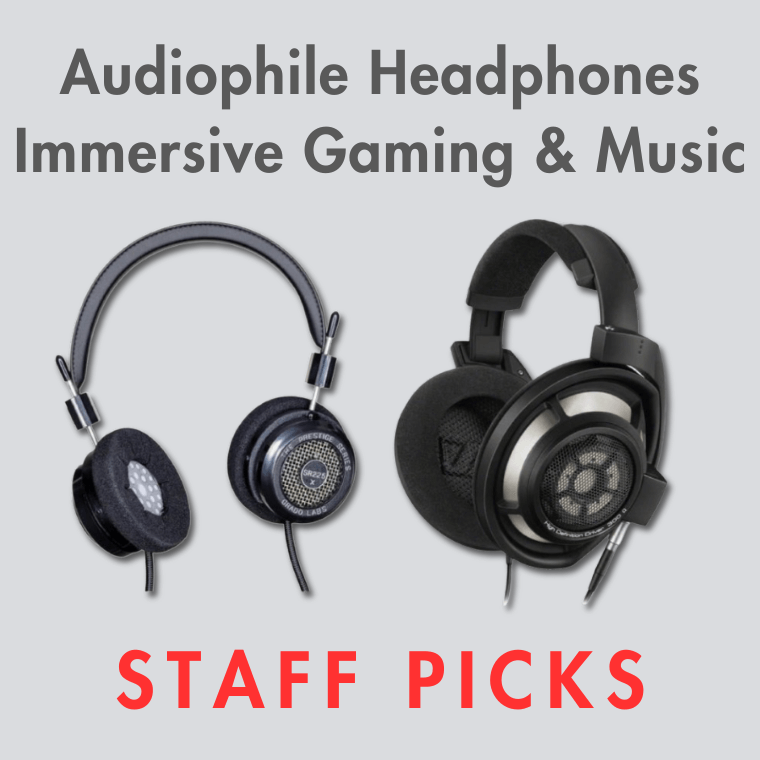
Audiophile Headphones for Gaming: Ditch Your Headset for Better Sound
For years, the "gaming headset" has been the undisputed king of game audio. Marketed with aggressive designs, flashy RGB, and promises of virtual surround sound, these peripherals often come with a hefty price tag. However, many avid gamers, particularly those venturing into competitive play or seeking deeper immersion, are discovering a secret that audiophiles have known for decades: dedicated audiophile headphones for gaming offer a vastly superior experience. It's time to re-evaluate your setup and understand why ditching your conventional gaming headset for a pair of high-fidelity headphones can revolutionize your gameplay.
The allure of "gaming headsets" is understandable. They offer an all-in-one solution with an integrated microphone, often boasting features like surround sound emulation and customizable EQ. Yet, beneath the flashy exterior, many fall short where it matters most: sound quality. They frequently prioritize booming bass and aggressive aesthetics over clarity, accurate soundstage, and precise imaging. This results in a muddy, indistinct sound that, while perhaps exciting initially, can hinder your ability to pinpoint enemy footsteps, discern subtle environmental cues, or truly get lost in a game's rich soundscape.
This article will guide you through the world of using audiophile headphones for gaming, explaining the fundamental differences, offering recommendations, and providing essential tips to elevate your audio experience to new heights.
Why Ditch Your Gaming Headset? The Audiophile Advantage
The primary reason to consider audiophile headphones for gaming is simple: superior sound quality. Unlike their gaming-specific counterparts, audiophile headphones are engineered from the ground up to reproduce sound as accurately and naturally as possible. This meticulous design translates directly into several critical advantages for gamers:
- Unmatched Clarity and Detail: Audiophile headphones reveal layers of sound you never knew existed. From the distant rustle of leaves to the distinct click of a reload, every sonic detail becomes clearer, giving you more information.
- Precise Soundstage: Imagine the audio landscape of your game. The "soundstage" refers to how wide and expansive that soundscape feels. Audiophile headphones often boast a significantly wider soundstage, making it feel like sounds are coming from all around you, not just two speakers pressed against your ears. This is crucial for immersion and competitive awareness.
- Pinpoint Imaging: Imaging is the ability to accurately place sounds within that soundstage. Can you tell if footsteps are coming from directly left, slightly in front, or behind you? High-quality audiophile headphones excel at this, giving you a distinct competitive advantage in FPS games where every millisecond and every direction counts.
- Natural Audio Reproduction: Gaming headsets often use artificial processing and boosted frequencies (especially bass) to create a "cinematic" effect. Audiophile headphones, conversely, aim for a balanced, natural sound profile, allowing the game's audio engineers' work to shine through as intended.
- Durability and Build Quality: Many audiophile headphones are built to last, using premium materials and robust construction that often surpasses the flimsy plastic of many gaming headsets.
The cumulative effect of these advantages is transformative. Not only will you hear enemies earlier and with greater precision, but you'll also experience game worlds with unparalleled depth and immersion. You're not just playing a game; you're truly inhabiting it.
Open-Back vs. Closed-Back: A Gamer's Dilemma
One of the first decisions you'll face when choosing audiophile headphones for gaming is whether to opt for an open-back or closed-back design. Each has distinct characteristics that impact sound and usability.
Open-Back Headphones
Open-back headphones feature earcups with perforations or grilles that allow air and sound to pass through. This design offers a unique sonic signature:
- Pros for Gaming:
- Wider, More Natural Soundstage: This is their primary advantage. Sounds feel like they're coming from outside the headphones, creating an expansive, airy feel that closely mimics listening to speakers in a room. This significantly enhances spatial awareness in games, making it easier to pinpoint enemy locations.
- Reduced Ear Fatigue: The open design prevents pressure buildup, leading to a more comfortable listening experience over long gaming sessions.
- More Natural Sound: Less resonance and a more "transparent" sound profile due to the lack of a sealed chamber.
- Cons for Gaming:
- Sound Leakage: Sound leaks out of the headphones, meaning people around you can hear what you're listening to.
- No Noise Isolation: You'll also hear your environment, which can be distracting in noisy settings.
Open-back headphones are highly recommended for competitive gamers playing in quiet environments where maximum soundstage and imaging are paramount. If you want to delve deeper into this choice, explore our dedicated guide: Open or Closed Back? Choosing Audiophile Headphones for Gaming.
Closed-Back Headphones
Closed-back headphones have solid earcups that completely seal around your ears, isolating you from your surroundings.
- Pros for Gaming:
- Excellent Noise Isolation: Blocks out ambient noise, allowing you to focus completely on the game's audio. Ideal for noisy households or shared spaces.
- No Sound Leakage: Your game audio won't disturb others.
- Punchier Bass: The sealed design can often lead to a more impactful, though sometimes less natural, bass response.
- Cons for Gaming:
- Smaller Soundstage: Sounds tend to feel more "in your head" and less expansive compared to open-backs, which can slightly reduce spatial awareness.
- Potential for Heat and Fatigue: The sealed design can sometimes lead to warmer ears and pressure buildup over long sessions.
Closed-back headphones are a strong choice for immersive single-player experiences or for gamers who need to block out external distractions and maintain privacy.
Top Audiophile Headphone Recommendations for Gamers
The world of audiophile headphones for gaming is vast, but certain models consistently rise to the top for their performance, value, and suitability for gaming. Here are some highly regarded options, ranging from entry-level to enthusiast-grade, often cited by the gaming community:
Entry-Level Gems (Under $150-200)
- Samson SR850: An incredible value, these semi-open studio headphones offer a surprisingly wide soundstage and good clarity for their price point, making them an excellent entry into audiophile gaming.
- Philips SHP9500: Often recommended as a benchmark for affordable open-back headphones. They are renowned for their comfort, natural sound, and decent soundstage, providing a fantastic foundation for gaming audio.
Mid-Range Powerhouses ($200-400)
- Sennheiser HD 599: Building on the legacy of the HD 598, the HD 599 offers excellent sound quality with a clear, engaging signature and a comfortable fit. They are relatively easy to drive, meaning they might not strictly require a dedicated amplifier/DAC, making them convenient for newcomers. Their wide soundstage and good imaging are great for general gaming and competitive play.
- Sennheiser HD 560S: These headphones are specifically praised for their neutral sound profile and exceptional imaging, making them a favorite among competitive FPS players who need to pinpoint every sound with precision. They also offer a comfortable, lightweight design.
- Beyerdynamic DT 900 Pro X: A fantastic all-rounder. These open-back headphones boast Beyerdynamic's legendary build quality, an engaging yet analytical sound, and excellent imaging. They are designed to be easy to drive, working well with various sources.
- Beyerdynamic TYGR 300R: Often considered a gaming-focused audiophile headphone, the TYGR 300R provides a balanced sound signature with a wide soundstage and excellent positional audio, making it a stellar choice for both immersive and competitive gaming without needing an amplifier.
- Sennheiser HD 6XX (Massdrop): While perhaps more known for music, the HD 6XX offers incredible resolution and a natural sound that also translates well to gaming, especially for immersive experiences. They are comfortable for long sessions but do benefit significantly from a dedicated amplifier.
For more specific recommendations and deeper dives into how these headphones enhance your in-game experience, check out our detailed guide: Best Audiophile Headphones for Gaming: Pinpoint Footsteps & Immersion.
The Amplifier and DAC Question: Are They Necessary?
When discussing audiophile headphones for gaming, the topic of Digital-to-Analog Converters (DACs) and amplifiers often arises. But are they always necessary?
- What is a DAC? A DAC (Digital-to-Analog Converter) takes the digital audio signal from your PC and converts it into an analog signal that your headphones can play. Your PC's motherboard has a built-in DAC, but external DACs are often of higher quality, offering a cleaner, more accurate conversion, free from electrical interference.
- What is an Amplifier? An amplifier takes the analog signal from the DAC and boosts its power, allowing it to drive your headphones effectively. Some headphones, particularly those with higher impedance (measured in Ohms, e.g., 250Ω), require more power than a typical motherboard can provide to reach their full potential.
Do you need one? It depends.
- For easier-to-drive headphones like the Sennheiser HD 599, Philips SHP9500, or Beyerdynamic TYGR 300R, your motherboard's onboard audio might be perfectly sufficient. Many modern motherboards have surprisingly decent audio chipsets.
- However, for headphones with higher impedance (e.g., some Beyerdynamic models like the DT 990 Pro 250Ω, or the Sennheiser HD 6XX), an external amplifier is highly recommended, if not essential. Without enough power, these headphones will sound quiet, lack dynamics, and won't perform at their best.
- Even with easy-to-drive headphones, a dedicated DAC/Amp can provide a cleaner, more detailed sound by bypassing potential interference or noise from your PC's internal components. Devices like the Schiit Magni3+ are popular choices for their performance and value.
Our advice: Start with just the headphones. If you notice a lack of volume, clarity, or dynamic range, or if you hear static, then consider adding a DAC/Amp combo or a dedicated unit.
Optimizing Your Setup for the Ultimate Gaming Experience
Acquiring top-tier audiophile headphones for gaming is a significant step, but a few additional considerations can further enhance your setup:
- Microphone Solution: Unlike gaming headsets, audiophile headphones do not come with integrated microphones. You'll need a separate solution. Popular choices include:
- ModMic: An attachable boom microphone that can be affixed to almost any headphone.
- Stand-alone USB Microphone: Options like the Blue Yeti, HyperX QuadCast, or Rode NT-USB Mini offer superior voice quality for streaming or competitive communication.
- Virtual Surround Sound Software: While audiophile headphones excel at stereo imaging, software solutions like Dolby Atmos for Headphones, DTS Headphone:X, or Windows Sonic can further enhance spatial audio perception in games. These technologies simulate a multi-speaker environment using advanced algorithms, making sounds feel more directional and immersive. Experiment to see what works best with your specific headphones and games.
- Equalization (EQ): While audiophile headphones aim for a natural sound, you can fine-tune their profile using software equalizers (like Equalizer APO on PC). A slight boost in certain treble frequencies can make footsteps stand out more, while a subtle bass bump can add impact to explosions without muddying the sound.
- Comfort is King: Long gaming sessions demand comfortable headphones. Pay attention to earcup material (velour is often preferred for breathability), clamping force, and headband design. Most audiophile headphones prioritize comfort, but individual head shapes vary.
Conclusion
The shift from traditional gaming headsets to audiophile headphones for gaming represents a significant upgrade for any serious player. By prioritizing accurate sound reproduction, expansive soundstage, and precise imaging, audiophile headphones provide a distinct competitive advantage, deeper immersion, and a more enjoyable overall experience. While the initial investment might seem higher, the longevity, versatility, and sheer audio fidelity offered by these headphones make them a worthwhile upgrade that will serve you well for years to come, not just for gaming but for music and movies too. It's time to truly hear your games and elevate your play.